
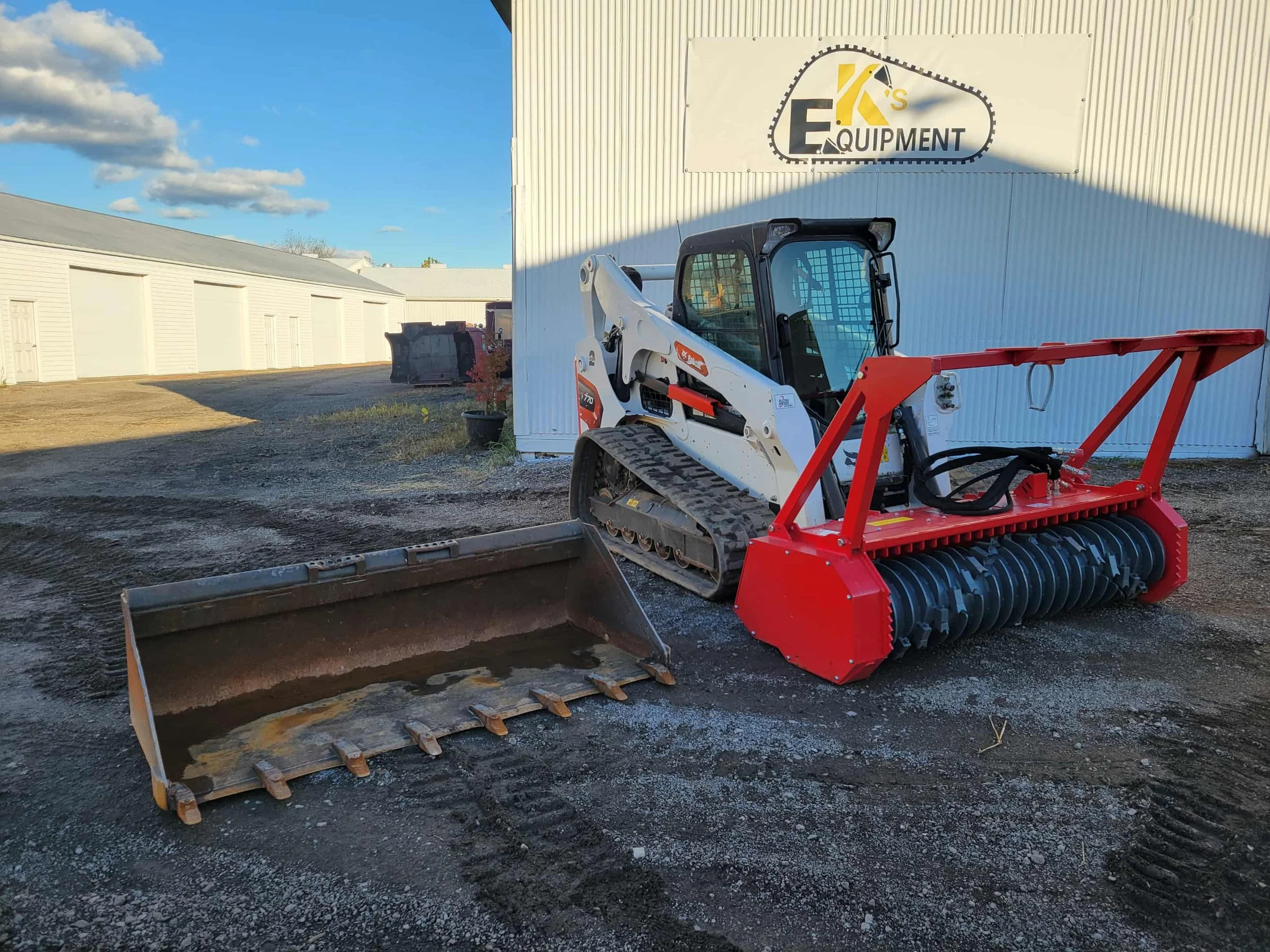
There’s a patch of ground you want back, and a skid steer mulcher attachment looks like the answer. Maybe it is. But before you start comparing prices, write down what you own and what you’re trying to clear. Those two things can rule out a head that otherwise looks just right.
For Pennsylvania buyers talking with Keystone Equipment Sales Services, that’s a useful place to start. Bring the loader details. Bring questions about the property, too, especially the parts you can’t see through the brush.
Will It Run On My Skid Steer?
The mounting plate fits. Good. That still leaves quite a bit to check.
Which hydraulic package is actually installed on your loader? A model name alone may not tell you. You’ll need its flow and operating pressure, then the allowable ranges for the head you’re considering. Some lighter cutters use standard flow; many forestry mulchers need high flow. Neither label is a substitute for matching the numbers.
And there’s the rest of the hookup: controls, couplers, hoses, a case drain if required. Get the manufacturer’s compatibility guidance for the carrier and attachment weights as well. A heavy head out front affects stability. Cooling is another reason to check the manuals rather than rely on horsepower. Running an attachment briefly doesn’t prove the loader can keep it working for hours.
What Am I Actually Cutting?
Say it’s a fence line. Is that young brush along a fence you can see, or years of growth covering old wire? Very different jobs. Rocks, discarded metal, slopes, and tight access all belong in the buying conversation. So does stem size, not just how tall everything looks in a photo.
Now picture the ground afterward. Do you need a route you can walk, or are you expecting somewhere ready to seed? A mulcher won’t automatically level the ground or take out roots. A finer finish can mean extra passes, so allow time for that.
Ask about the head’s approved cutting tools. Knives can suit cleaner brush work; carbide tools may be the more suitable choice in tougher conditions. The choice depends on the particular head and material, not just which tooth sounds stronger. Carbide is no permission to hit wire or rocks. While you’re comparing, price a set of replacements.
Is My Cab Enough?
Don’t count on an ordinary enclosed cab being enough for forestry work. Check both manufacturers’ requirements for the door or glazing, guarding, and other protection before you buy. If your loader needs changes, they’re part of the purchase cost.
The people outside matter here, too. What happens when someone walks along the neighboring path? Or a vehicle comes down the road beside the work? Debris can be thrown out of the cutting area. Use the manuals and a site assessment to establish the exclusion zone and restrictions, not a distance guessed from watching somebody else’s machine. If you can’t keep the area clear, that changes whether the job can proceed. Operator training belongs in the plan, not after delivery.
Why Is This Used One So Cheap?
It might be a reasonable buy. It might need a rotor, bearings, or hydraulic work that wipes out the savings. Service records and an inspection by a qualified technician are worth more than fresh paint. Have the motor, rotor, hoses, bearings, and frame checked; ask about repairs and overheating.
Then ask a less exciting question: can you get its parts? A tooth price is useful, but so is knowing whether the correct replacement is available. The same goes for model-specific drive parts.
There will be maintenance even on a new head. Follow the maker’s shutdown and servicing procedures before inspection or clearing wrapped material. A stopped machine can still have stored hydraulic energy, and cutting parts remain dangerous. This isn’t a reach-in-and-pull-it-out job.
Do I Need To Own It?
For one overgrown property, put a contractor’s quote beside the buying figures. A rental may be worth pricing too, provided the setup is compatible, and you have the training to use it. Include delivery or hauling, protection, wear parts, and your own time. Otherwise, you’re comparing an attachment price with a whole job.
Repeat clearing work gives you a different reason to buy. But if the head also means buying another loader, stop and work through those costs first.
Have Your Loader Details Handy
Call Keystone Equipment Sales Services at (724) 856-6046 about your Pennsylvania clearing project. Tell us the loader model, the hydraulic setup and what is growing on the property. We can discuss options with you; anything still uncertain about compatibility needs an answer before money changes hands.