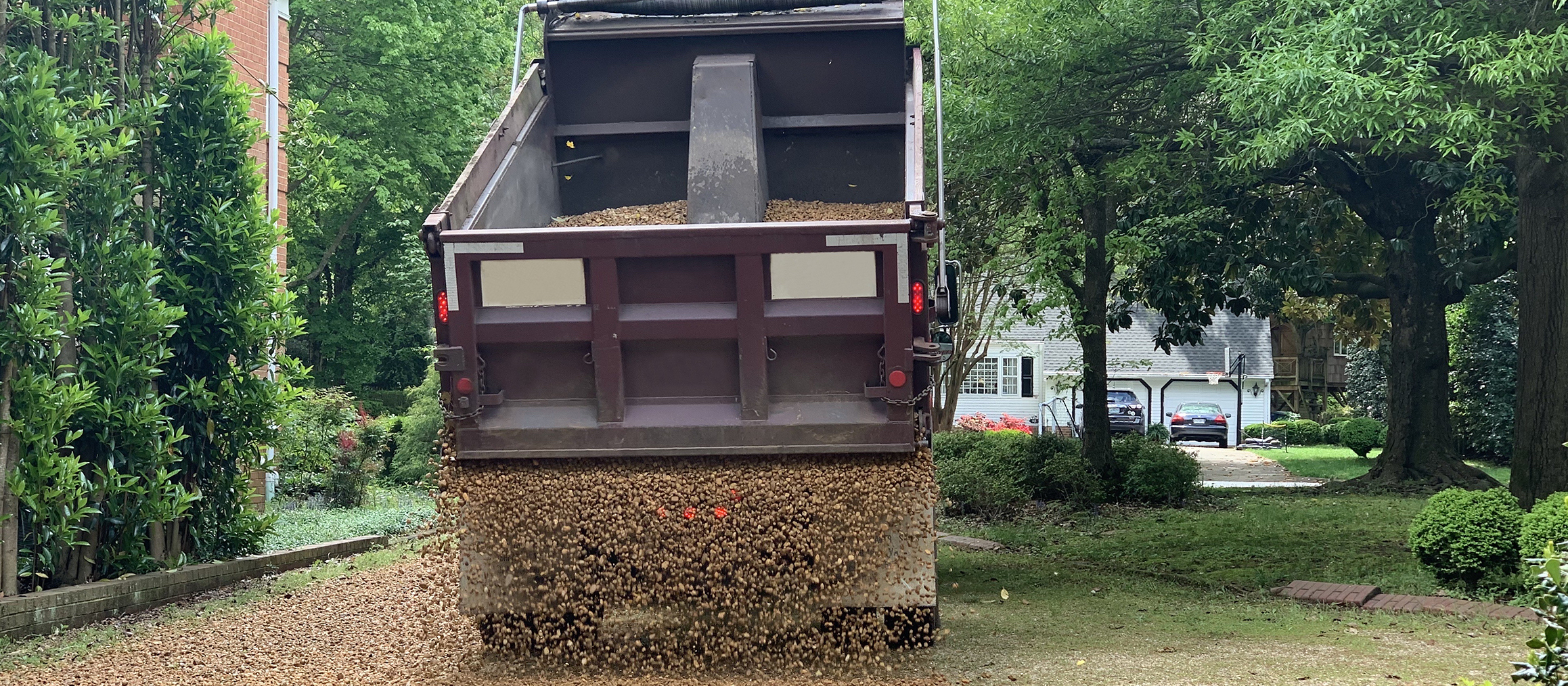
A bigger load sounds convenient until the truck can’t make the turn into the property. We’d settle that question before counting how many trips it could save. For driveway work, the quantity of gravel and the access have to make sense together.
We’re Keystone Equipment Sales & Service, and this is an equipment discussion, not an offer to deliver gravel. Your material supplier and hauler need to confirm the order and delivery arrangement. If you’re considering buying equipment for the work, we can discuss that side of the decision.
First, Which Driveway Job Is This?
A light refresh of an existing surface isn’t the same order as a new driveway requiring separate layers. The contractor needs to establish the design and compacted depths first. Otherwise a truck-size calculation can be perfectly tidy and still be based on the wrong job.
Once the plan is established, the supplier can translate the volume into an order for the actual material. We’d leave that conversion tied to the stone being supplied, its moisture, and the appropriate compaction allowance. “A load of gravel” isn’t a dependable quantity until you know what load and what gravel the speaker means.
A Full Body May Be Too Much Weight
Suppose there’s room for another scoop. That tells you something about remaining space, but nothing by itself about legal payload. The dump truck has weight limits even when the body isn’t full. Sideboards don’t increase its axle or tire ratings.
For a particular vehicle, look at the actual empty weight, installed equipment, body, and fuel, as well as the applicable ratings and legal route limits. The load has to comply with all of them. We’d want those specifications in front of us before discussing whether a truck suits your intended use, not rely on what a similar-looking truck carried elsewhere.
Walk The Route In Both Directions
The gate may be wide enough and the turn still too tight. A culvert, bridge, soft shoulder, or nearby building can add another restriction. Think about leaving as well as arriving, especially if a delivery will partly block the lane.
Have the hauler approve the route and unloading area, including firm, suitably level ground. “We’ve had trucks in before” doesn’t establish what this truck can safely do. Nor can a photograph tell the hauler the strength of a crossing or what is underneath a soft-looking edge. Get those uncertainties assessed before arrival.
Remember The Body Goes Up
The clearance on the way in isn’t the clearance for unloading. Once the body rises, overhead lines or another obstruction may make that spot unusable. The required clearances have to hold throughout the operation. The ground matters at the same time: soft or uneven support can make tipping unsafe even where there’s plenty of room overhead.
That’s for the hauler to approve, not for a homeowner to wave away because another truck once fitted. A smaller truck and extra trips may turn out to be the practical arrangement. Saving a trip isn’t a saving if the delivery can’t be completed safely.
What Happens After It Is Dumped?
Imagine the pile in place for a moment. Can the spreading machine still get past it? Can the next delivery reach its unloading area? A convenient place to dump can become an inconvenient place to work, so settle the stockpile arrangement before material is on the ground. Moving it twice isn’t an attractive use of the day.
For equipment you’re buying, bring us the task as well as the machine name. How far must it reach, what load is it expected to handle, and on what ground? Compare those needs with the specifications, including attachment compatibility. A bucket that looks suitable in a listing may not suit the machine or the job you actually have.
Call us at Keystone Equipment Sales & Service on (724) 856-6046 in New Castle, PA. If you’re considering a purchase for driveway work, tell us about it and we can discuss available equipment. Keep the gravel quantity and delivery arrangements with your supplier and hauler; our conversation is about the equipment you’re looking to buy.