

The rental machine worked well all weekend. Now you’re looking at excavators for sale and wondering whether it’s time to own one. Before comparing prices, think about the next several jobs—not just the one you finished. Will the machine spend its time trenching, cleaning ditches, or getting into backyards with barely enough room to turn?
At Keystone Equipment Sales Services in New Castle, PA, we want that everyday work to lead the conversation. A compact excavator can look right in a listing and still be awkward to haul or too wide for the places you need it. Start with the work, then narrow down the machines.
Buy For The Jobs That Keep Coming Back
Write down the work you expect to do regularly. Be specific. Digging shallow drainage trenches around a property is a different assignment from opening larger excavations day after day. Note the depth and reach you need, the space available, and whether lifting is part of the job.
It’s easy to shop for the biggest project you might tackle someday. The trouble comes when that choice makes every ordinary job harder to reach or more expensive to transport. On the other hand, buying too small can leave you struggling through the work you bought it for.
If one unusual project is pushing you toward a much larger machine, compare renting for that job with owning the machine that suits your usual workload. You don’t have to make one purchase cover every possibility.
Measure The Entrance Before Studying The Bucket
Bring actual measurements of gates and narrow passages. Include anything overhead and the room available once the excavator gets through. Fitting between two posts doesn’t tell you whether there’s room to work on the other side.
Look at the machine’s dimensions in the configuration you would use. If it has retractable tracks, understand the manufacturer’s instructions for travel and operation rather than assuming the narrowest setting is suitable for every task.
Tell us about soft areas, finished lawns, slopes, and places where access becomes difficult after rain. No machine choice makes unsuitable ground safe. The site conditions need their own assessment, not just a comparison of operating weights.
Make Hauling Part Of The Purchase Decision
Don’t stop at the excavator’s advertised weight. Account for the configuration, bucket, coupler, attachments, and anything else that travels with it. Then check the truck, trailer, hitch, and other applicable ratings for the complete setup. If you aren’t sure how to assess that combination, get qualified guidance before buying.
A machine you can’t transport as planned changes the cost of ownership. You may need a different hauling arrangement, and that belongs in the budget now.
Also consider how often you’ll move it. An excavator staying on one property presents a different transport question from a contractor’s machine heading to another address several times a week. Ask about available pickup or delivery arrangements rather than assuming they’re included.
Check Tail Swing And Working Clearance
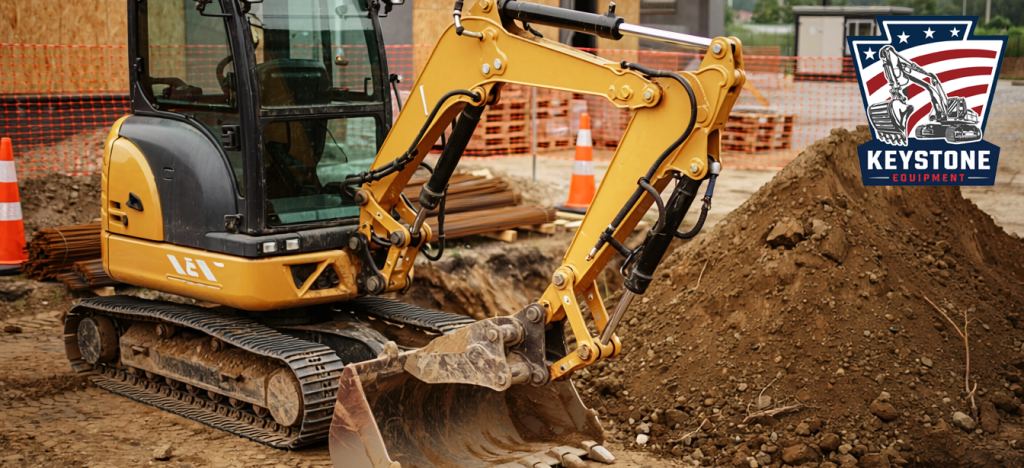
Tail swing describes how far the rear of the upper structure extends beyond the tracks as it turns. A conventional-tail-swing machine needs room behind it. A zero- or reduced-tail-swing design can help in confined areas, but those labels aren’t interchangeable. Check the actual dimensions.
You still need clearance for the boom, attachment, and the rest of the machine. Zero tail swing does not mean you can stop watching what’s around you.
If your work includes lifting, compare the manufacturer’s load charts for the exact configuration and intended position. A machine’s size or advertised digging depth isn’t a substitute for its lifting limits. Bring the details of what you need to handle so those questions can be addressed before purchase.
Choose Attachments Before You Commit To The Machine
A bucket may cover today’s work. Later you might want a thumb for handling material, an auger, or another hydraulic attachment. Discuss that plan while you’re comparing excavators, not after you’ve brought one home.
Physical fit is only the beginning. The attachment must suit the machine’s capacity and mounting system. For hydraulic tools, compare required flow and pressure with the machine’s capabilities, along with any specific plumbing or control requirements.
Ask what is already fitted, what is included in the sale, and what an additional setup would involve. Two machines with similar prices may leave you with very different attachment costs. A compatible tool you can use properly is worth more than an impressive attachment that doesn’t suit the excavator.
Look Beyond Fresh Paint And Low Hours
For used equipment, ask for available service records and arrange a proper inspection. Hours help describe use, but they don’t tell you how the machine was maintained. Pins, bushings, tracks, leaks, and hydraulic operation deserve attention from someone qualified to assess them.
Arrange an appropriate demonstration rather than experimenting with unfamiliar controls. Pay attention to visibility, seating, access, and the control layout. Check whether routine service points are accessible, too. Those small inconveniences become familiar quickly when it’s your machine.
Call Keystone Equipment Sales Services in New Castle, PA, at (724) 856-6046 to discuss the compact excavator you’re looking for. Bring your job list, access measurements, hauling information, and attachment plans. We can talk through available options with the work in mind—not just the machine that looks best in a photo.